What clients with in-network insurance paid per session, Q2 2026
- $0
- $0
- $0
- copay
Out of every 4 clients, 3 paid nothing out of pocket.
- $0 more than 3 in 4
- $1 to $30 about 1 in 5
- Over $30 3%
97% paid $30 or less. MMHC clients, second quarter of 2026.

Online therapy for LGBTQ+ New Yorkers
Work with a therapist experienced with LGBTQ+ clients. Sessions are by secure video and in-network with major insurance plans, and first sessions are often available within five days.
or call 212‑960‑8626

92%
would recommend MMHC
2026 MMHC client experience surveys, 289 unique clients.
92%
would recommend MMHC
289 respondents
99%
said their therapist provides a safe and welcoming environment
350 respondents
90%
said therapy is effectively addressing their primary concerns
303 respondents
Manhattan Mental Health Counseling (MMHC) is a New York telehealth psychotherapy practice, founded in 2014, that provides LGBTQ+ affirming therapy to people ages 15 and up by secure video. Affirming therapy treats a client's sexual orientation and gender identity as healthy parts of who they are. A client who asks for an LGBTQ+ affirming therapist is matched with one experienced in this work. MMHC is in-network with 13 insurance plans, completes benefits verification within 24 hours and often schedules a first session within five days of the form.
Start here
The six questions people ask most before booking. More in the FAQ.
Yes
Yes. MMHC provides LGBTQ+ affirming therapy to gay, lesbian, bi, trans and queer New Yorkers ages 15 and up by secure video. Tell us you want an LGBTQ+ affirming therapist, and the Therapy Coordinator matches you with one who is experienced in this work, trained for what you want help with and in-network with your plan. Meet our LGBTQ+ affirming therapists.
Identity-affirming care
Therapy that treats your sexual orientation and gender identity as healthy parts of who you are. An affirming therapist understands the stress that stigma adds to everyday life and works with it directly.
Yes, with 13 plans
Yes. It is billed as standard psychotherapy. We are in-network with 13 plans: Aetna, Cigna, UnitedHealthcare (including Oxford and Optum), Healthfirst, Oscar, MVP Health Care, Fidelis Care, EmblemHealth, Molina Healthcare, Affinity, TRICARE, Medicare Advantage and Original Medicare. We verify your specific plan before your first session and match you with a therapist who is in-network with it.
$0 for more than 3 in 4
More than 3 in 4 MMHC clients pay $0 a session with in-network insurance, and 97% pay $30 or less (MMHC clients, second quarter of 2026). Self-pay is $200 for the first session and $175 after.
Often within five days
First sessions are often available within five days, and next-day openings are common. We verify your benefits within 24 hours of the form and tell you your exact cost on the free screening call.
No, anywhere in New York State
No. MMHC is a Manhattan practice, and every session is online. You can join from anywhere in New York State.
The basics
Three things to know before you book, in the order most people ask them.
Serious psychological distress, NYC adults, 2023
NYC Health Department [1]
Ordinary, evidence-based therapy delivered by someone who treats your sexual orientation and gender identity as healthy parts of who you are. You come for the same reasons anyone does, and for some that are specific to living as an LGBTQ+ person.
Nothing about who you are needs fixing.
Minority stress: the added strain of stigma, prejudice and having to manage who knows what about you.
The city's Health Department names stigma and discrimination as factors that may put LGBTQ+ adults at higher risk of poor mental health [1]. The American Psychological Association's 2021 guidelines: sexual minority orientations are normal variations of human sexuality [2].
An affirming therapist works with that pressure directly and does not treat your identity as the cause. You decide how much your sexual orientation or gender identity enters the conversation.
Help with anxiety, depression, relationships or the stress of rejection starts with what you want help with.
Bottom line: You do not have to explain or defend who you are before the work can start. We match you with a therapist who already works this way.
Why people come
Most LGBTQ+ clients come for the reasons anyone does. Some reasons are specific. These are things people often say when they first get in touch.
Loneliness is common, and it is not just you.
In New York City's 2023 health survey, 52% of gay or lesbian adults reported feeling cut off from other people, against 38% of heterosexual adults [1].
If one of these is yours, that is enough to start.
You do not need a diagnosis or the right words.
My mood has been low for months and it will not lift.
I am coming out, or still deciding who to tell.
Coming out, at any age
My family accepts me, but with conditions.
Family
Dating is wearing me down. Or a breakup is.
I am dealing with how I am treated at work.
I have questions about my gender.
Gender identity
There is shame I learned early and still carry.
Shame
I feel cut off from other people.
Or something else entirely. Bring it as it is.
The statements are written examples, not quotes from clients.
Where we can help

You can bring one of these, or several. Your therapist starts with what you want help with.
The most common reasons people start. See our anxiety and depression pages for how we treat each.
Working out what is true for you, who to tell and when. You set the pace.
Dating, commitment, breakups and the patterns that repeat. MMHC also offers couples counseling. Read: Why Trust Takes a Hundred Deposits and One Withdrawal.
What to do when the people or the community you come from do not accept all of you. Several MMHC therapists work with both BIPOC and LGBTQ+ communities. See also spiritual therapy.
Bullying, rejection, harassment or violence, recent or long ago. See our trauma and PTSD page. Read: Hypervigilance After Trauma.
Space to explore or affirm your gender with a therapist experienced in this work.
We are in-network with 13 plans: Aetna, Cigna, UnitedHealthcare (including Oxford and Optum), Healthfirst, Oscar, MVP Health Care, Fidelis Care, EmblemHealth, Molina Healthcare, Affinity, TRICARE, Medicare Advantage and Original Medicare. We tell you your exact cost on the free screening call, before session one.
The difference
Four things you get from one practice.
13
insurance plans
Affirming and in-network.
MMHC is in-network with 13 plans, including Aetna, Cigna, UnitedHealthcare, Healthfirst and Fidelis Care, so affirming therapy does not have to mean paying the full fee yourself.
1 person
makes your match
Matched by a person.
Tell us you want an LGBTQ+ affirming therapist and anything else that matters to you. The Therapy Coordinator, a person, makes the match.
4 weeks
between check-ins
Progress you can see.
Every client receives two short questionnaires every four weeks: the PHQ-9 for depression and the GAD-7 for anxiety. You and your therapist review your answers alongside the goals you set.
0
waiting rooms
Online, from a place you choose.
Sessions are by secure video. You choose where you take them, and there is no waiting room.
Why it works
Yes. Your therapist uses the methods with the strongest evidence for anxiety, depression and trauma. Affirming therapy adds an understanding of stigma-related stress to those methods, so the work fits your circumstances.
The direct evidence is early and still small. In the first randomized trial of an affirming version of cognitive behavioral therapy, young gay and bisexual men who received it showed less depression and less alcohol misuse than men on a waitlist [3].
That is why we do not rest on the label. Every MMHC client's progress is measured on a schedule, whatever method their therapist uses.
Bottom line: You get an established method from a therapist experienced with LGBTQ+ clients. You and your therapist agree on goals and review them regularly, alongside your questionnaire scores every four weeks.
The methods
Affirming therapy is a stance, and the methods under it are the established ones. Your therapist proposes an approach in the first sessions and explains why.
| Approach | What it is | When it fits |
|---|---|---|
| CBT | Cognitive behavioral therapy. You learn to catch and test the thoughts that drive anxiety and low mood. | Worry, low mood and harsh self-talk, including shame absorbed from others. |
| DBT | Dialectical behavior therapy. Skills for strong emotions and for hard conversations. | Emotions that swing fast, or conflict with family and partners. |
| EMDR | Eye movement desensitization and reprocessing. A structured therapy for trauma. | Memories of bullying, rejection or violence that still feel present. |
| Psychodynamic therapy | Talk therapy that looks at how earlier relationships shape current ones. | Patterns that repeat in dating, friendship or family. |
| Mindfulness | Training attention so you can notice a feeling without being run by it. | Stress, rumination and self-criticism. |
Further reading: CBT vs. DBT for Depression: What Should Guide the Choice? · Online CBT for Anxiety in NYC: What Actually Changes?
Bottom line: You do not have to pick a method before you start. Tell us what is going on, and your therapist recommends one.
What to expect
Your first session is a 53-minute video session. Your therapist asks what brought you in and what you want from therapy. You decide what to share and when, including how you describe yourself.
90%
of clients surveyed said therapy at MMHC is effectively addressing their primary concerns (2026 MMHC client experience surveys, 303 unique clients).
Progress is measured, not guessed at. Every MMHC client receives the PHQ-9 and the GAD-7 every four weeks, with milestone check-ins at 8, 16 and 52 weeks and after treatment ends. The results inform clinical supervision and case review.
Progress, measured
Session 1
Assessment
Your history, symptoms and starting scores
Every 4 weeks
PHQ-9 + GAD-7
Scores reviewed with your therapist
Week 8
Milestone check-in
Week 16
Milestone check-in
Week 52
Milestone check-in
After therapy
Follow-up check-in
Bottom line: You get two short questionnaires every four weeks, so you and your therapist can track how you are doing. If the fit is not right, you can switch therapists within MMHC at no extra cost.
Cost
More than 3 in 4 MMHC clients pay $0 a session with in-network insurance, and 97% pay $30 or less. LGBTQ+ affirming therapy is billed like any other psychotherapy session: 53 minutes under CPT code 90837 (the billing code for a full-length individual psychotherapy session).
What clients with in-network insurance paid per session, Q2 2026
Out of every 4 clients, 3 paid nothing out of pocket.
97% paid $30 or less. MMHC clients, second quarter of 2026.
| Your situation | What you pay | What we do |
|---|---|---|
| In-network insurance (13 plans) | Your plan's copay (the fixed fee you owe at each visit), or coinsurance (the percentage you pay after the deductible is met). More than 3 in 4 clients pay $0. | We verify your benefits within 24 hours and walk you through your exact cost on your screening call, before session one. |
| Out-of-network plan | Our self-pay rate up front. Your plan sets what it reimburses. | We provide superbills (itemized receipts with the codes insurers require) so you can file for reimbursement. |
| No insurance | $200 for the first session, then $175 a session. | Per-session billing, no subscription, cost confirmed before you start. |
Insurance
We verify your benefits for you and tell you your exact cost before you commit. You do not need to call your insurer first.
In-network with 13 plans
Aetna, Cigna, UnitedHealthcare (including Oxford and Optum), Healthfirst, Oscar, MVP Health Care, Fidelis Care, EmblemHealth, Molina Healthcare, Affinity, TRICARE, Medicare Advantage and Original Medicare.
No surprises
Day 1
You submit the form
Tell us your insurance plan in a couple of fields.
Within 24 hours
We verify your benefits
Our team checks your coverage with your plan.
Free 15-minute call
You hear your exact cost
On the screening call, before you commit to anything.
Session one
You start, no surprises
Your first 53-minute video session, at the price you were told.
On Medicaid? We take six Medicaid managed care plans.
Healthfirst, Fidelis Care, Molina Healthcare, Affinity, MVP Health Care and UnitedHealthcare Community Plan. Participation varies by plan product, so we confirm yours before session one. Read: Does Medicaid Cover Therapy?
Bottom line: You know your cost before you commit. We tell you the exact number on the free screening call.
Anywhere in New York
We are a Manhattan practice, and every session is online. The same therapists are available whether you are in Chelsea, Jackson Heights, Park Slope, Buffalo or the Hudson Valley. Your choice of therapist is not limited to who practices near you.
On average, video therapy works as well as therapy in an office. A 2021 meta-analysis found a negligible difference in average results between live video psychotherapy and in-person psychotherapy [4]. New York law also bars a state-regulated insurer from excluding a covered service because it is delivered by telehealth [5].
Hover or tap a pin to see that region
Clients join from
New York City
Clients join from
Long Island
Clients join from
Hudson Valley
Clients join from
Capital Region and North Country
Clients join from
Central New York and Finger Lakes
Clients join from
Western New York
Areas of focus
Our 100+ therapists are experienced in addressing a broad variety of mental health concerns and utilizing a wide variety of therapeutic modalities.
In their words
5,000+ clients since 2014 · These ratings cover the whole practice, across New York State.
So far so good! My first appointment with Stephanie went better than expected. She is a great listener, affirming and made me feel comfortable from beginning to end.
She was great at making me feel comfortable on my first appointment. I know already we are going to click, and she will help me!
She is so wonderful to talk to, she makes it easy to open up and share while creating a safe space to do so. Highly recommended!
Even though we weren’t in the same room, she made me feel completely comfortable and connected. Her warm and supportive demeanor came through, even over the screen.
Sandra is very attentive, a great listener, and offers helpful questions and answers.
First experience was great! What stood out was her listening and giving feedback for solutions.
I was able to be paired with a therapist I actually connected with on the first try, which is pretty miraculous. Stephanie is absolutely wonderful. I have been seeing her for 7 months now and my experience has been seamless so far.
I’ve been a client at this practice for over a year now and it’s been life-changing. The intake was seamless and my therapist is outstanding. Looking forward to continuing my treatment here.
Over 2 years with my therapist and she’s a 10/10. She has helped me a lot with all of my issues, especially coping with BPD and depression. She’s very accommodating and willing to go above and beyond!
Intake process was smooth and easy. I love the Telehealth platform used as well. My therapist is great and I love that I am doing my mental health here.
My therapist is excellent! I am happy with my therapy.
Kind and patient attention and support as I begin my emotional healing journey in earnest.
Who you might work with
The Therapy Coordinator matches you from the full team, based on what you want help with. Three therapists who work with LGBTQ+ clients are below.
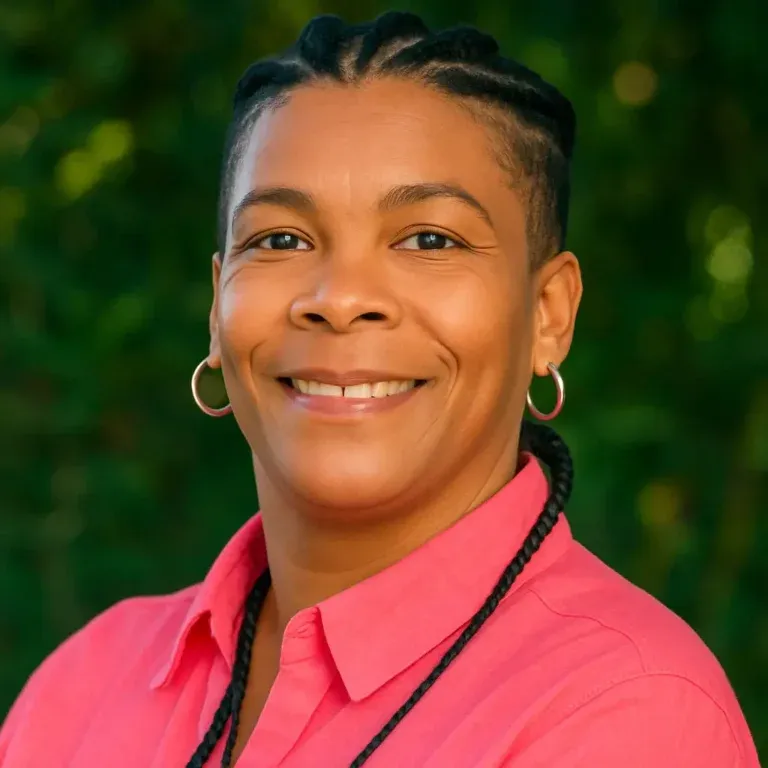
License #3055
Euraina has more than two decades of experience. She is passionate about working with LGBTQ individuals and providing affirming care. She works with anxiety, depression, chronic stress, burnout and isolation, blending transpersonal therapy, CBT, mindfulness and meditation.

License #10909
Alexandra has more than eight years of experience in behavioral health. Her approach is trauma-informed, client-centered, queer-positive and anti-oppressive. She works with complex trauma, self-esteem, relationships, anxiety and depression, blending DBT, Emotion-Focused Therapy, attachment theory and Mindful Self-Compassion.

License #17023
Dee works with depression, anxiety, trauma and burnout, along with LGBTQI+ and BIPOC concerns. Dee holds an advanced certification in Interdisciplinary Trauma Studies and uses psychoeducation, mindfulness, psychodynamic approaches and CBT.
LMHC is a Licensed Mental Health Counselor. LMHC-D adds New York's diagnostic privilege, the state's authorization to diagnose.
Accepting new patients
Yes, we are taking new clients now. First sessions are often available within five days, and next-day openings are common. Insured clients are scheduled as quickly as self-pay clients.
If the first match is wrong, the Therapy Coordinator responds to rematch requests within one business day, and rematching within MMHC costs nothing extra.
MMHC has therapists who work in Spanish, Italian, Mandarin and Cantonese.

Choosing well
Any therapist can write "LGBTQ+ friendly" on a profile. These five questions show whether the work is behind the words.
Ask us all five on your free screening call: 212‑960‑8626.
What training or experience do you have with LGBTQ+ clients, and with people in my situation?
How do you work with a client whose family, faith or culture does not accept who they are?
Are you licensed in New York, or practicing under licensed supervision, and who supervises you?
How will we measure whether therapy is helping, and how often will we review it?
What exactly will I pay per session, and can you confirm that before the first appointment?
Four simple steps
Submit the form.
Tell us briefly what is happening, your availability and your insurance. Say that you want an LGBTQ+ affirming therapist. You receive a response within 24 hours.
Book your free 15-minute screening call.
You get an email with a link to schedule it. We ask about your concerns and what you want in a therapist, verify your insurance (going over your coverage takes about 5 minutes) and tell you your exact cost on the call, before you commit.
Get matched by a person.
The Therapy Coordinator pairs you with a therapist whose training fits what you want help with, who is in-network with your plan and whose style suits you, direct or reflective.
Start, often within five days.
Your first 53-minute video session is scheduled at a time that works, including mornings, evenings and weekends. If the fit is not right, you switch clinicians without restarting intake.
Step one takes about two minutes.
Common questions
If you do not see your question here, contact our support team at 212‑960‑8626.
Identity and fit
Yes. You do not have to be out to start therapy. You decide what to share and when, and therapy is a place to think through coming out before you tell anyone else. Coming out is not a goal your therapist sets for you.
Not the basics. Ask for an LGBTQ+ affirming therapist on the form, and you are matched with one who already works with LGBTQ+ clients. Your therapist still asks about your own life, relationships and priorities, because no two clients are the same.
No. Affirming therapy is a way of working, and a therapist of any identity can be trained in it. We match you on training and experience with LGBTQ+ clients.
Yes. MMHC has therapists who work with clients of all gender identities, including gender-expansive clients. Therapy can cover gender itself or anything else you bring.
Yes. MMHC sees clients ages 15 and up. See: Therapy for young adults.
Yes. Tell the Therapy Coordinator. You move to another MMHC therapist without restarting intake, and it costs nothing extra. See: How therapist matching works.
Care and services
Yes. MMHC offers couples counseling by secure video. Coverage for couples sessions is set by your plan, so we check it when we verify your benefits. See: couples counseling.
Yes. An affirming therapist treats what brought you in, including ADHD, anxiety and depression. Your identity can be part of the conversation without being the reason you came. Affirming care describes how the therapist works, whatever the concern. See: ADHD therapy.
No. MMHC provides psychotherapy. Our team is licensed mental health counselors and limited-permit counselors practicing under licensed supervision, and we do not prescribe.
Yes. MMHC has therapists who work in Spanish, Italian, Mandarin and Cantonese. Ask for the language you want, and the Therapy Coordinator looks for a therapist who works in it, takes your plan and has openings. See: Mandarin- and Cantonese-speaking therapists.
Online, insurance and cost
On average, yes. A 2021 meta-analysis compared live video psychotherapy with in-person psychotherapy and found a negligible difference in results. Gains from video therapy were largest for anxiety, depression and PTSD (Fernandez and colleagues, 2021). Tell us on the screening call if you are unsure whether video suits what you need. See: Why choose online therapy.
For a state-regulated plan, yes. New York Insurance Law § 3217-h bars an insurer from excluding a covered service because it is delivered by telehealth, and your copay, coinsurance or deductible must be at least as favorable as for the same visit in person. The service and the provider still have to be covered under your policy. Employer plans that are self-funded follow federal rules, so we confirm yours when we verify your benefits.
Yes. NYCE PPO, a health plan for New York City employees, uses Optum's behavioral health network for mental health care. MMHC is in that network through its UnitedHealthcare contract. We verify your coverage before your first session. See: UnitedHealthcare at MMHC.
You can still start. Self-pay is $200 for the first session and $175 after. We give you a superbill to submit to your plan for out-of-network reimbursement, and your plan sets what it pays back. See: Our insurance page.
Fit check
Sounds like you? Step one takes about two minutes.
Get started
Submit the form and you will get an email with a link to book a screening call at your convenience.
Prefer to talk? Call 212‑960‑8626
Keep exploring
MMHC blog
MMHC blog
MMHC blog
Free, a few minutes
Free, educational
Free, a few minutes
1. New York City Department of Health and Mental Hygiene (March 2025). Mental Health Outcomes among LGBTQ+ Adults in New York City. Epi Data Brief No. 145. nyc.gov (opens in a new tab)
2. American Psychological Association, Task Force on Psychological Practice with Sexual Minority Persons (2021). Guidelines for Psychological Practice with Sexual Minority Persons. apa.org (opens in a new tab)
3. Pachankis JE (2018). The scientific pursuit of sexual and gender minority mental health treatments: toward evidence-based affirmative practice. American Psychologist, 73(9), 1207-1219. pmc.ncbi.nlm.nih.gov (opens in a new tab)
4. Fernandez E, Woldgabreal Y, Day A, Pham T, Gleich B, Aboujaoude E (2021). Live psychotherapy by video versus in-person: a meta-analysis of efficacy and its relationship to types and targets of treatment. Clinical Psychology and Psychotherapy, 28(6), 1535-1549. PubMed (opens in a new tab)
5. New York Insurance Law § 3217-h, Telehealth delivery of services. New York State Senate. nysenate.gov (opens in a new tab)
This page is for informational purposes and is not medical advice. If you have persistent or concerning symptoms, consult a licensed medical professional. If you are in crisis or immediate danger, call 911 or go to the nearest emergency room, or see our emergency resources page.
CPT® is a registered trademark of the American Medical Association.